


By Tim Marienau, CEO
At Prairie Energy Cooperative, we take pride in planning ahead and keeping our member-owners informed. When changes arise that could affect you, we believe in communicating early, openly, and as often as possible.
Over the past several months, we’ve shared information about anticipated cost increases in 2026 from our two generation and transmission (G&T) cooperatives, Corn Belt Power Cooperative and Basin Electric Power Cooperative. These costs have a direct impact on Prairie Energy’s expenses, as power supply represents more than 70% of our total costs.
Because power costs are largely dependent on how much electricity our members use, they are considered “uncontrollable” expenses. While programs such as load management for water heaters help reduce demand during peak times, members ultimately determine when and how much electricity they need in their homes and businesses.
In July, we were truly blind-sided at our Basin Electric Summer Manager Conference in Deadwood, SD to hear that a significant rate increase was coming in 2026. As you can imagine, there has been a lot of push back from the managers in Iowa and across the Basin Electric footprint, since this increase was not on our radar in 2025. Several managers have asked the Basin Electric leadership team and their board of directors to look at other solutions to phase in a huge rate increase over many years. Our efforts were unsuccessful and as stated in our October issue, Basin Electric implemented the following rate increases:
- January 1, 2026: 9.9% increase in wholesale power costs
- January 1, 2027: Additional 7.8% increase in wholesale power costs
While this isn’t welcome news, transparency is one of our guiding principles. We want our member-owners to understand what’s happening, why it’s happening, and how Prairie Energy is working to manage these changes.
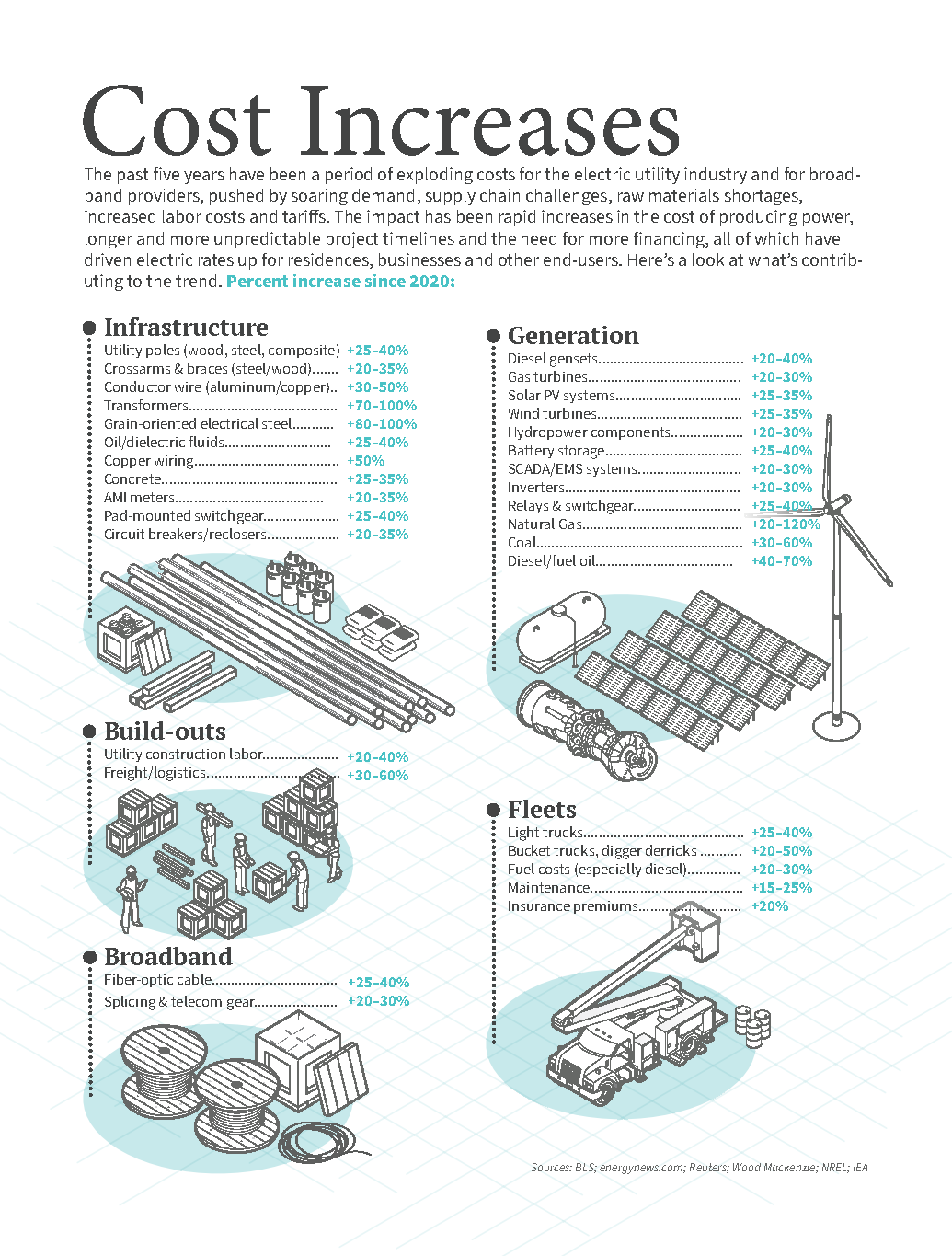
Like most electric cooperatives, Prairie Energy does not generate its own electricity—we purchase it from G&T providers. As those providers face rising costs, the effects flow downstream to local cooperatives and, ultimately, to members. The increase in costs is being driven by a combination of national and industry-wide factors, including:
- Federal policy impacts
- Rising energy demand and reliability concerns
- Regulatory and compliance requirements
- Transmission and infrastructure challenges
- Aging assets and maintenance needs
- Labor and supply chain costs
For Basin Electric, additional pressures include system-wide load growth, inflation, supply chain challenges, and volatility in the power market. In response, Basin Electric’s capital investment forecast has grown from $7 billion to more than $11 billion over the next decade.
A major component of this investment is the newly announced Bison Generation Station, a natural gas-fired power plant near Epping, North Dakota. Scheduled to begin operation in 2030, the nearly $4 billion project will produce about 1,490 megawatts of electricity—one of the largest generation projects in Basin Electric’s history. The plant will help meet growing electricity demand throughout the cooperative network, providing stable, around-the-clock baseload generation. At its construction peak in 2027, the project is expected to employ approximately 1,000 workers and later provide about 50 full-time positions in operations and maintenance.
Prairie Energy’s mission remains steadfast: to provide safe, reliable, and affordable electricity to our member-owners. While the challenges of today’s energy landscape are significant, our commitment to serving you is stronger than ever.
We will continue to share updates through our newsletter, website, and social media channels as we work closely with our power suppliers to manage costs and plan for a sustainable energy future.